
To find a business mentor in Pakistan, define your business goals, explore startup incubators, join professional networks, and connect with experienced founders on LinkedIn. Request a short meeting about one specific challenge, then build trust through thoughtful follow-ups and measurable progress.
Starting a business in Pakistan can be challenging without experienced guidance. Whether you’re launching an online store in Lahore, building a tech startup in Islamabad, or growing a family business in Karachi, a mentor can help you make informed decisions and avoid common mistakes.
Learning how to find a business mentor in Pakistan is not about connecting with famous CEOs. It is about finding an experienced professional who understands your industry, business challenges, and goals—and can offer practical, relevant guidance.
This guide covers seven steps to find, approach, and build a productive relationship with a mentor.
What Are the 7 Steps to Find a Business Mentor in Pakistan?
To find a business mentor in Pakistan, start by defining your goals, identifying experienced professionals in your industry, and reaching out through startup programs, business networks, or LinkedIn.
Follow these seven steps:
- Define your goals: Identify the business problem you need help solving.
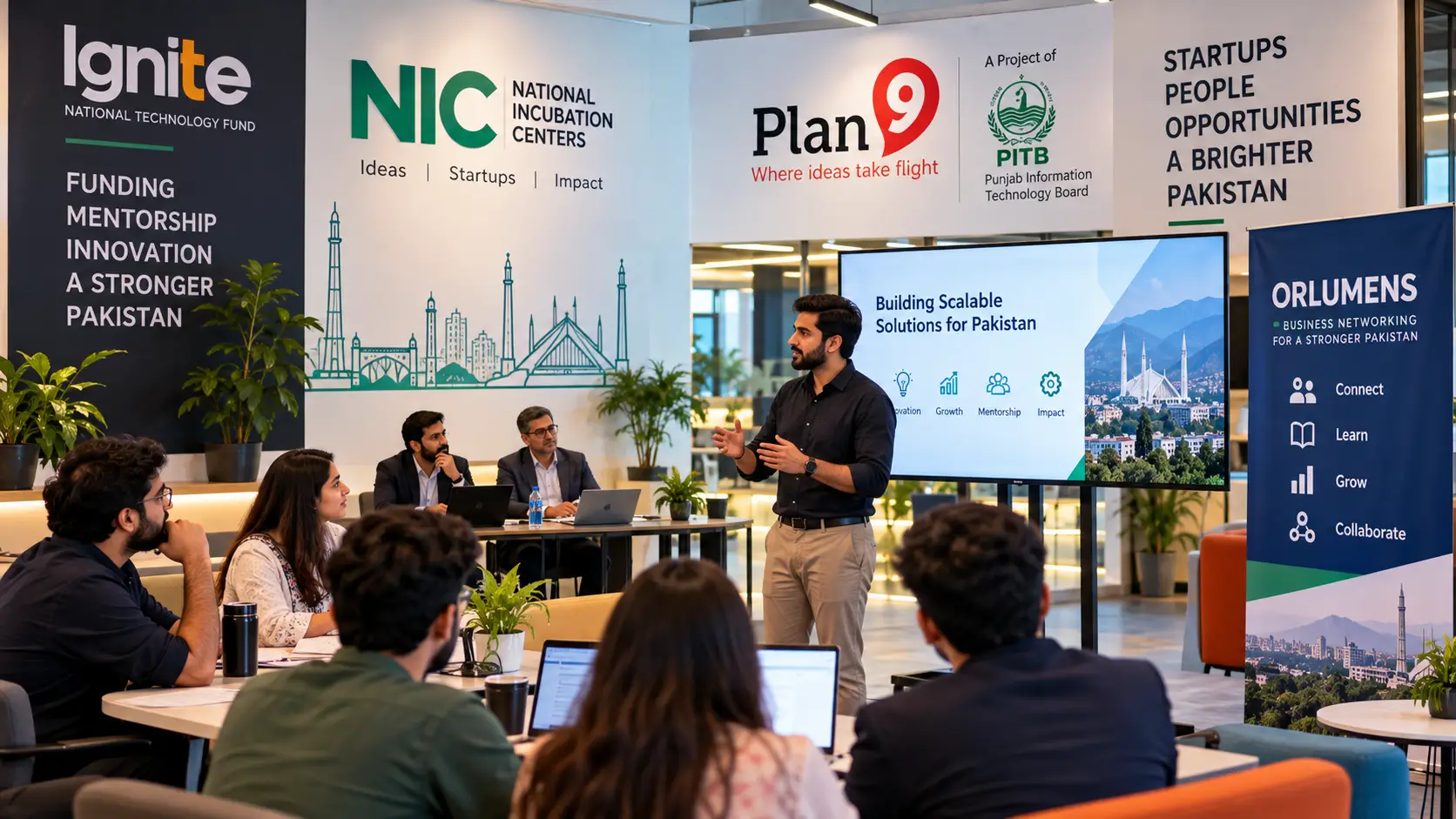
- Explore startup programs: Look into NICs, Plan9, and university incubators.
- Join business networks: Connect with chambers of commerce and industry associations.
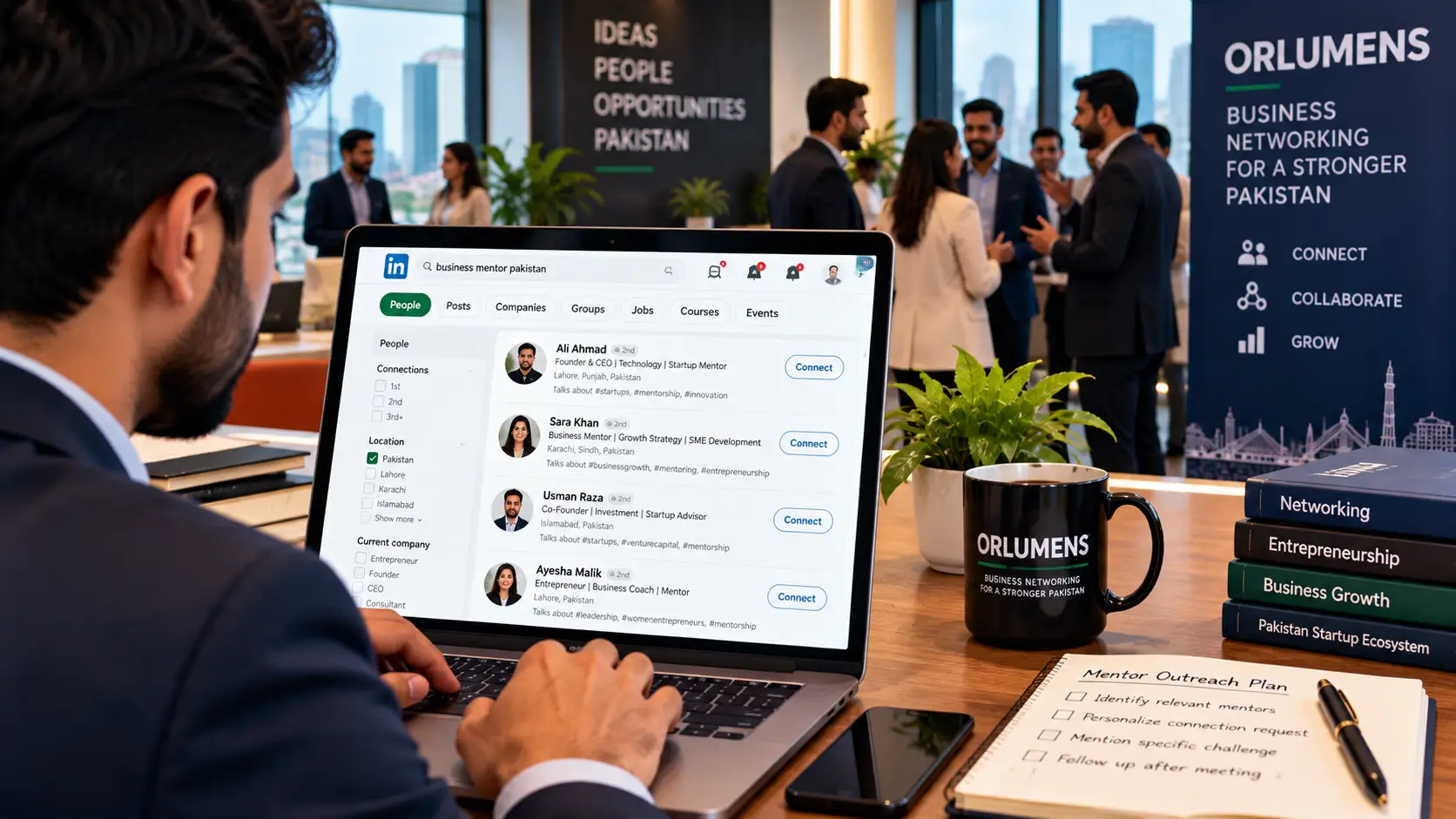
- Find mentors on LinkedIn: Search for experienced founders and professionals in your industry.
- Use existing connections: Ask alumni, colleagues, and business contacts for introductions.
- Attend industry events: Meet entrepreneurs at startup conferences and networking sessions.
- Build the relationship: Start with a short conversation, ask relevant questions, and share your progress.
You don’t need to complete every step. Start with the channels that match your industry and business stage.
What Does a Business Mentor Do, and Why Do Pakistani Entrepreneurs Need One?
A business mentor is an experienced professional who helps entrepreneurs solve problems, evaluate decisions, and develop business skills through practical advice and feedback.
For example, a startup founder struggling with customer acquisition may benefit from a mentor who has successfully grown an e-commerce company.
A small manufacturer planning to export products may need someone who understands international buyers, pricing, and supply chains.
A mentor can help with business planning, market research, leadership, sales strategy, financial decisions, and professional connections.
How is a mentor different from a business coach or consultant?
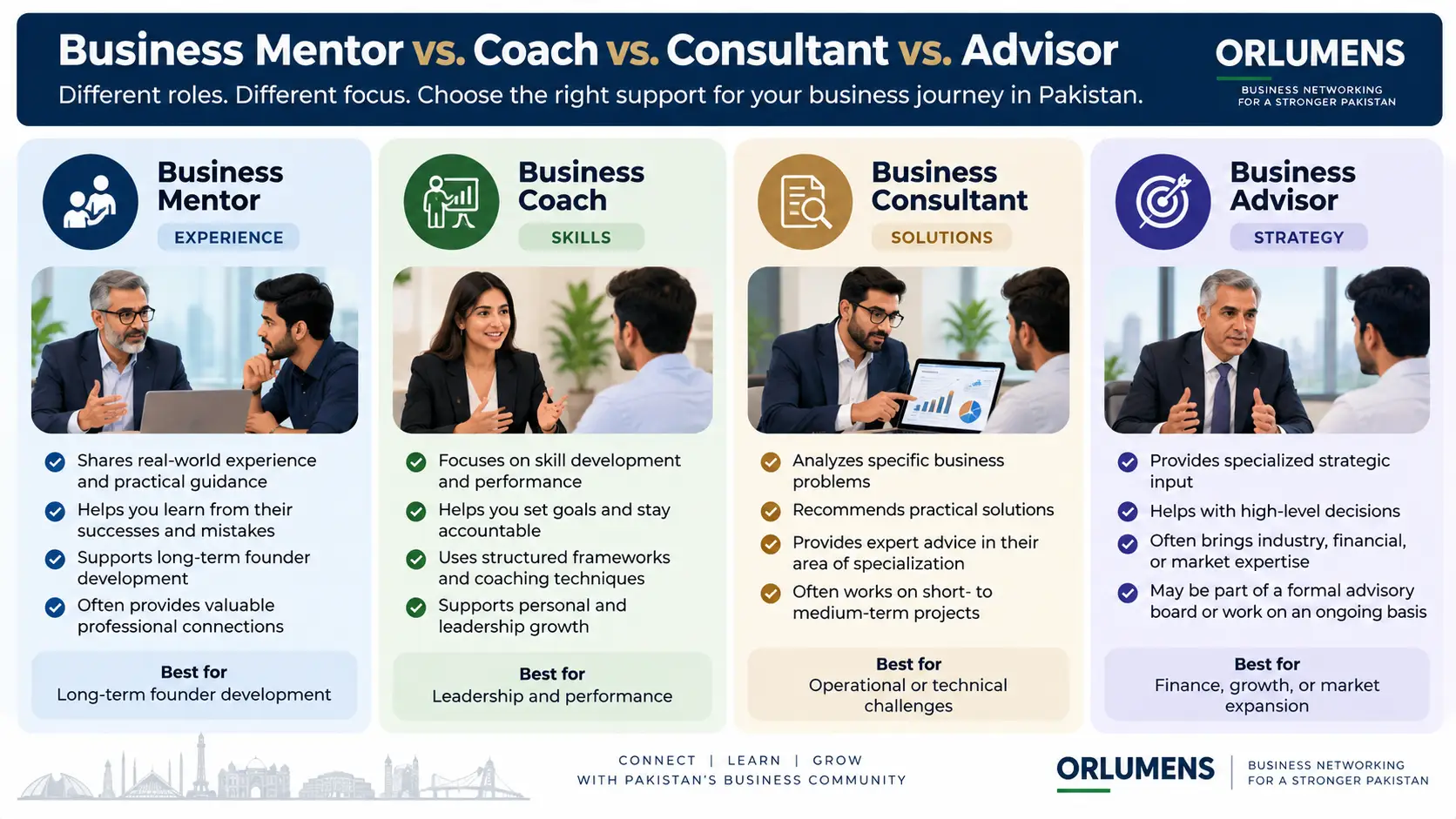
A business mentor shares practical experience and guidance, while a coach focuses on skill development, a consultant addresses specific business problems, and an advisor offers specialized expertise.
| Professional | Main role | Best for |
| Business mentor | Shares experience and practical guidance | Long-term founder development |
| Business coach | Develops skills and accountability | Leadership and performance |
| Business consultant | Recommends solutions to specific problems | Operational or technical challenges |
| Business advisor | Provides specialized strategic input | Finance, growth, or market expansion |
These roles can overlap. Choose based on the help you actually need, not the person’s title.
Where Can You Find a Business Mentor in Pakistan?
Startup incubators, professional associations, LinkedIn, and university networks are useful places to find business mentorship in Pakistan.
Step 1: How Do You Define Your Mentorship Goals?
Start by identifying one business challenge and the type of experience needed to solve it.
Common mentorship goals include:
- Improving sales and digital marketing
- Raising startup funding
- Managing cash flow
- Hiring and leading a team
- Expanding into new cities
- Entering export markets
- Developing a product or business model
Example: Instead of saying, “I need help growing my business,” say, “I run an online clothing store in Lahore and need advice on reducing customer acquisition costs.”
This gives potential mentors a clear reason to respond.
Action: Write a one-sentence mentorship goal before contacting anyone.
Step 2: Which Startup Incubators Offer Mentorship in Pakistan?
Pakistan has established incubation and acceleration programs that provide eligible founders with access to business guidance, training, and industry connections.
National Incubation Centers (NICs)
Ignite, Pakistan’s National Technology Fund, supports a network of incubation centers serving entrepreneurs across several cities.
These centers help eligible startups develop business models, improve products, and connect with industry experts.
Official resource: Ignite – National Technology Fund
Plan9 – Punjab Information Technology Board
Plan9 supports early-stage technology startups through incubation, training, mentoring, and business development.
According to PITB, its incubation model includes a six-month cycle and does not take equity in participating startups under the described program model.
Official resource: PITB Plan9
LUMS Centre for Entrepreneurship (LCE)
LCE offers entrepreneurship training, incubation, and acceleration programs.
Its Slingshot Acceleration Programme, for example, describes tailored mentorship for revenue-generating startups seeking to scale.
Official resource: LUMS Centre for Entrepreneurship
Useful fact: PITB reported in November 2024 that Regional Plan9 had graduated more than 360 startups nationwide. This is a historical program figure, not a current count of active startups or mentors.
Always check official application requirements, program availability, and current terms before applying.
Step 3: Which Business Networks Can Help You Find a Mentor?
Chambers of commerce and industry associations can connect business owners with experienced professionals in their sectors.
Consider exploring:
- LCCI: Lahore Chamber of Commerce and Industry
- KCCI: Karachi Chamber of Commerce and Industry
- ICCI: Islamabad Chamber of Commerce and Industry
- P@SHA: Pakistan Software Houses Association
- SMEDA: Small and Medium Enterprises Development Authority
For example, a textile entrepreneur in Faisalabad may benefit more from an experienced exporter than from a general startup coach.
Ask relevant associations about networking sessions, member introductions, and business development activities. Mentorship is not guaranteed by membership.
For more ways to build professional connections, explore our guide on how to build a business network in Pakistan.
Step 4: How Can You Find a Business Mentor on LinkedIn?
LinkedIn allows you to search for experienced professionals by industry, location, company, and role.
Use a targeted process:
- Search phrases such as “e-commerce founder Pakistan” or “software CEO Lahore.”
- Review profiles for relevant business experience.
- Check professional achievements and industry background.
- Read their posts to understand their expertise.
- Send a short, personalized message.
LinkedIn outreach template
Hi [Name],
I’m [Your Name], founder of [Business]. I noticed your experience in [Industry] and would value your perspective on [Specific Challenge].
Would you be open to a 20-minute conversation next week?
Thank you for considering my request.
Best,
[Your Name]
Avoid asking strangers to become long-term mentors in your first message. A small, specific request is easier to consider.
Step 5: Can Your University or Existing Network Help?
Your existing professional network can be a useful source of mentor introductions.
Start with former managers, university alumni, professors, suppliers, industry contacts, and experienced business owners.
For example, a recent university graduate could contact an alumni association and ask to connect with someone who has built a business in the same industry.
Practical tip: Ask for an introduction to a person with specific expertise rather than asking generally for a successful entrepreneur.
Step 6: Which Events and Communities Should You Join?
Startup events, demo days, business conferences, and founder communities provide opportunities to meet potential mentors.
Explore events organized by incubators, universities, chambers of commerce, and relevant professional associations.
You can also join carefully selected LinkedIn, WhatsApp, or Facebook communities focused on entrepreneurship.
Before attending an event, identify two or three people you want to meet.
Ask thoughtful questions about their experience, exchange contact details when appropriate, and send a follow-up message within 48 hours.
Step 7: How Do You Turn a First Meeting Into Long-Term Mentorship?
A productive mentorship relationship begins with trust, clear expectations, and consistent communication.
Start by asking for advice on one challenge rather than requesting an open-ended commitment.
During your first conversation:
- Explain your business in one minute.
- Ask two or three focused questions.
- Listen without turning the meeting into a sales pitch.
- Agree on one practical next step.
- Thank the person and share a progress update.
If the first meeting goes well, ask whether occasional follow-up conversations would be welcome.
Example: “Your advice helped us test a new customer retention strategy. Could I share our results with you next month?”
Respect the mentor’s time and avoid expecting free consulting or guaranteed introductions.
Expert Insight: Why Industry Experience Matters in a Business Mentor
In an interview published by Startup.pk, Adnan Faisal, a Pakistani startup mentorship professional and former Technology Incubation Centre manager at NUST Islamabad, emphasized the importance of choosing mentors with relevant industry knowledge.
He explained that founders need different types of guidance at different business stages. Early-stage entrepreneurs may benefit from general business advice, while founders developing specialized products often need mentors with deep sector knowledge. Growing startups may need strategic guidance and access to professional networks.
Key takeaway: Choose a mentor who understands your industry and current business challenge, rather than relying on professional titles alone.
Source: Adnan Faisal on Mentors and Mentoring — Startup.pk
How Do You Choose the Right Business Mentor and Avoid Common Mistakes?
Choose a mentor based on relevant experience, credibility, communication, and availability—not popularity alone.
Before committing to an ongoing relationship, consider these questions:
- Have they solved business problems similar to yours?
- Can you verify their professional experience?
- Do they provide honest, constructive feedback?
- Do they have time for occasional conversations?
- Are their expectations and professional boundaries clear?
- Could there be a conflict of interest?
Watch out for people who promise guaranteed investment, instant business success, or access to influential contacts in exchange for large upfront payments.
Is free or paid mentorship better?
Free mentorship is a useful starting point for founders seeking general guidance. Paid mentorship may be appropriate when you need specialist knowledge or structured support.
Some incubators provide mentorship within their programs. Others may have eligibility requirements, equity terms, or fees.
Before paying anyone, request clear information about their experience, session costs, deliverables, and refund terms.
For a paid engagement, define what success means. For example, you might want a reviewed business plan or a clearer sales strategy rather than a promise of revenue growth.
Frequently Asked Questions About Business Mentorship in Pakistan
1. How can I find a business mentor in Pakistan for free?
You can find free mentorship opportunities through LinkedIn, university alumni groups, startup events, and professional contacts. Some incubators also provide mentoring to eligible startups as part of their programs. Check application requirements and any equity terms before joining. Free access does not always mean unrestricted or ongoing support.
2. Where can startup founders in Pakistan get mentorship?
Startup founders can explore National Incubation Centers, Plan9, LUMS Centre for Entrepreneurship, and university startup programs. Business associations and experienced founders on LinkedIn are also useful contacts. The right option depends on your location, industry, startup stage, and the type of business guidance you need.
3. How do I approach a business mentor on LinkedIn?
Start with a personalized message explaining who you are, what your business does, and why the person’s experience is relevant. Ask one specific question or request a short introductory call. Keep your message brief, avoid generic requests, and follow up politely if you do not receive a response.
4. How much does a business mentor cost in Pakistan?
Business mentorship fees in Pakistan vary by experience, specialization, and engagement format. Some mentors provide informal guidance for free, while professional advisors charge for sessions or longer engagements. There is no reliable universal price. Compare services, verify credentials, and request written terms before making a payment.
5. Can women entrepreneurs find business mentors in Pakistan?
Yes. Women entrepreneurs can explore university entrepreneurship programs, incubators, professional associations, and women-focused business communities. They can also search LinkedIn for experienced women founders and industry leaders. Program availability changes, so check current eligibility and mentoring opportunities through official channels before applying.
6. How long should a business mentorship relationship last?
A mentorship relationship can last from one conversation to several years, depending on the goals and availability of both people. Start with a specific business challenge and review progress after a few meetings. Continue only when the relationship remains valuable, respectful, and useful to both parties.
Conclusion: How to Find a Business Mentor in Pakistan and Take the First Step
Learning how to find a business mentor in Pakistan starts with understanding your business challenges and connecting with people who have relevant experience.
You don’t need a famous CEO or a large professional network. Start with one clear goal, identify three potential mentors, and send a thoughtful message this week.
Orlumens recognizes the importance of professional relationships, shared knowledge, and meaningful business connections in Pakistan’s entrepreneurial ecosystem.
Explore the Orlumens website to learn more about its business networking and community initiatives.
The right conversation may help you see your next business decision more clearly.
By Noor ul Hassan
Founder, ORLUMENS
Last updated: October 2026